Posts

Back to Basics: Why I Still Take Beginner Classes

Image
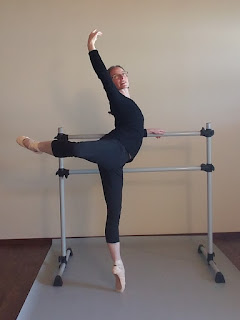
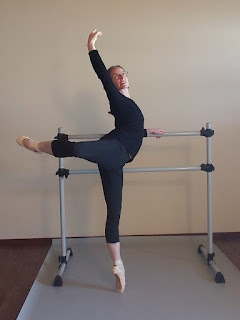
Kate practicing 4th Port de Bras with Épaulement By Kate Feinberg Robins Back to Basics A Surprise Beginner Class This year, I took advantage of the first week of school to head over to the  School of International Ballet , a local studio here in Redlands, California that I'd recently discovered.  The Wednesday Adult Ballet class was taught by Ms. Barbara, a founding member of Ballet West (and retired psychologist, according to my classmate, Jennifer).  It was a lovely class, with only one other student that day, and it was nice to be back in a studio with space to move and a bit of an audience, both of which always motivate me. Jennifer and Barbara both warned me before class began that it was intended for beginners. I suppose they could tell by how I carried myself and walked confidently to the barre that this was not my first time in a ballet studio. They encouraged me  to come back on Thursday or Fr...

What's the Difference Between Pilates and Yoga?

Image
By Kate Feinberg Robins Pilates? Yoga? What Is It? Sometimes it feels like everywhere we look there's a Pilates or yoga studio. Every gym and community center seems to offer Pilates, yoga, or a combined Pilates-yoga class. Are they the same? Are they different? What are they? Mind-Body Practice on a Mat Pilates and yoga are both mind-body practices done on a mat. As mind-body practices, both Pilates and yoga focus on coordinating breath with movement. Because of the focus on mind-body connection, Pilates and yoga are typically done slowly, with careful attention to the details of each movement, position, and breath. Both tend to focus on flowing from one movement or pose to the next, with deliberate transitions in between. Like many mind-body practices, the principles practiced in the studio (such as harmony, flow, and centering) are intended to be applied holistically in everyday life. Typically, yoga exercises and sequences are done on a "sticky mat" or "yoga mat....

How to Deal with a Back Spasm: 5 Home Exercise Tips

Image
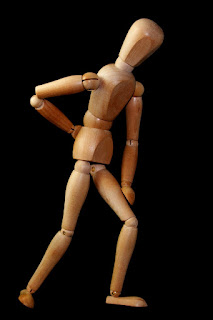
By Kate Feinberg Robins What Is a Back Spasm? If you’ve experienced a back spasm, you know it can be incredibly painful, start suddenly, and last several days. The good news is most muscle spasms can be managed through home exercise and over-the-counter medicine. (For more on causes and medical treatments, we recommend the Cleveland Clinic’s website .) A back spasm is basically when a muscle in your back contracts involuntarily and will not release. In our experience, it feels like sudden shooting and debilitating pain (usually accompanied by crying ☹️). Here are some tips we’ve learned that help get us through when it happens. 1. Slow Down Be patient with yourself. It can take weeks for the pain to go away fully. Often a spasm is (in part) your body telling you that you’re doing too much and forcing you to slow down. (And maybe next time, we can remember to slow down before it happens and avoid it altogether 🤔.) 2. Keep Moving This is the hardest and most important part. When it feel...

Learning Ballet as an Adult: Embrace Your Ballet "Accent"

Image
By Kate Feinberg Robins, PhD Embrace Your Ballet "Accent" I know as a linguistic anthropologist that languages are not made up simply of words, but of grammar, sounds, and cultural understandings. The same is true for ballet.  Ballet is not about what steps we can do. It’s about how we move.  If we know a few words (steps) and understand the principles behind them, we can communicate. If we know lots of words but don’t understand how they fit together grammatically, what they mean culturally, or how to pronounce them, communication is difficult at best. There is a myth that both ballet and languages must be learned in childhood.  Children’s brains and bodies do have greater plasticity. Children can speak new languages without a foreign-sounding accent. Their bodies can be shaped to the aesthetics of ballet. But anyone at any age is capable of learning.  Adults have a lifetime of experience that we can use to learn deliberately and purposefully. Whether learning a la...

Benefits of Weight-Bearing Exercise for Older Adults

Image
  By Kate Feinberg Robins Exercise for Older Adults As we age, it may be tempting to focus exclusively on safe, low-impact exercise. But weight-bearing exercise is equally important. After age 40, the effects of inactivity increase. When we are inactive, our muscle mass, strength, bone density, and heart health all decline at a higher rate than when we were younger. After age 40, we use it or lose it. Non-weight-bearing exercise helps us build and maintain muscle tone and strength . Weight-bearing exercise builds and maintains our bone density and heart health . What is Weight-Bearing Exercise? Any exercise where you support your own weight with your muscle strength is a weight-bearing exercise. This includes walking, running, dancing, capoeira , and many yoga poses. What is Non-Weight-Bearing Exercise? Any exercise where most of your weight is supported by water, the floor, a bicycle, or other apparatus is non-weight-bearing exercise. This includes swimming, Pilates, and cyc...

6 Ways to Make Creativity a Habit

Image
By Kate Feinberg Robins Working on creative projects reduces stress and anxiety, and improves problem-solving skills. So that’s great! We should all do it, right? But for adults who don’t make art as part of our jobs, it doesn’t always feel so simple. Here are some tips. Focus on the process, not the product. Give yourself a regular time and place to do your art, where you can focus on the doing without judgement. This might mean closing your door, covering mirrors and cameras, or putting on headphones. Any kind of creative expression counts. Make a list of creative activities that you can easily do. Remember—focus on what you have the resources to do, not what you consider yourself good at. Your list can include things as varied as writing, baking, playing music, dancing, or designing inventions. Choose anything on the list that you’re in the mood for. Play and explore. Try letting go of things like recipes, sheet music, and choreography. Give yourself the freedom to play with your m...

Art is Good for Your Brain

Image
By Kate Feinberg Robins Creativity improves brain plasticity. When we improvise dance or capoeira movements, we create and strengthen neural pathways in our brains. This conditions our brains to learn and process new information more readily. It makes us better learners and more skilled at coping with new situations. A growing number of scientific studies show that engaging in artistic endeavors physically changes the brain structure. Art helps with focus, memory, and creativity, as well as reducing stress and anxiety. Read more at npr.org and neuroartsblueprint.org .

How to Exercise with a Torn Back Muscle

Image
By Kate Feinberg Robins How Do I Know I Have a Torn Back Muscle? Here are some signs that your back pain might be due to a muscle tear: You can remember the moment that it started hurting.   You feel lopsided, with one side of your back much tighter than the other. The pain gets worse when you try to use the muscle. How Did it Happen? Think back to that moment when your back started hurting. You might have torn a muscle if you: stretched abruptly without warming up. forced yourself to stretch further than you were ready for. lifted too much weight suddenly and with poor form. Any movement that causes a sudden strain may cause a muscle to tear. How Can I Prevent it from Happening Again? Always warm up before stretching . Make sure you’re doing the the right kind of stretching at the right time. Stretch gently, giving your muscles plenty of warmth, breath, and time before deepening the stretch. Practice proper form with resistance or small weights before increasing your weight load. ...

You Will Succeed: An Interview with Misty Copeland

Image
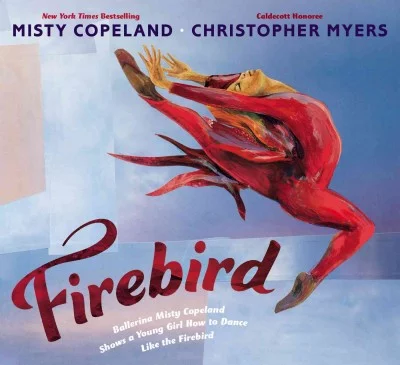
By Kate Feinberg Robins In a 2014 piece from NPR's Morning Edition , American Ballet Theatre dancer Misty Copeland discusses her children's book Firebird and how important it is to tell children, "You will succeed." Here are some highlights. On the challenges of women of color breaking into the field of professional ballet: I don't think that every African American or Latino or, you know, have the same body type, but yes, that's been one of the excuses, I think, saying that African Americans are too muscular or just aren't lean enough, and usually they say, "Oh, they have flat feet. So they don't have the flexibility that it takes to create the line in a pointe shoe." When people meet me in person they're usually surprised at how petite I am, because there's this idea that because I'm black I should look a certain way.... They hear those words from critics saying I'm too bulky, I'm too busty, and then they meet me in pers...

How to Stretch for a Warm-Up and Cool-Down

Image
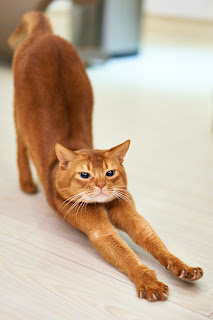
By Kate Feinberg Robins Warm-up stretching  should increase your mobility in preparation for more intense exercise, without putting yourself at risk of pulling a muscle. Be gentle and dynamic.  Move continuously rather than holding a position.  Keep your stretches small and your muscles in motion.  Cool-down stretching  decreases muscle soreness and tightness, and leads to long-term gains in flexibility. Sustain your position for several breaths or at least 30 seconds. Relax the muscles you're stretching.  Stretching for increased flexibility  requires repeated sustained stretches and lots of patience. Choose a moment when your muscles are very warm--like after a long walk or run.  Hold your stretch for several minutes, making sure not to put weight on the muscles being stretched.  Deepen your stretch gradually and with lots of breath.  The longer you hold the stretch and the more often you do it, the more gains you'll see in flexibility...

The Privilege of Doing What You Love - A Conversation with Sylvie Guillem

Image
  By Kate Feinberg Robins In a recent documentary, acclaimed dancer Sylvie Guillem, now retired from performing, shares insights on wellness, life, and a career in the arts. Beautifully filmed, with striking clips from her performance career. Here are some highlights from the interview. On the deep sense of responsibility that comes with the privilege of getting paid to do what you love: We are so lucky to do this. Very few people have the opportunity to go onstage and go in front of an audience and be treated like we are now.... We have the studio. We have the clothing. We have the pointe shoes. We have money. We get paid for that. That's a responsibility we have. ...If you don't respect the work you are doing then leave. ...It's a lack of respect for you, for the work you do, for dance, for the audience, and for the [dancers] who can't get in [to world class professional companies]. On the wellness benefits of ballet barre and Pilates:  I train because I feel good doi...

To Control Your Center of Gravity - Strengthening Core Muscles

Image
By Kate Feinberg Robins To find your center is to control your center of gravity . The most literal meaning of "finding your center" in ballet and capoeira is to physically control your center of gravity by developing and using strong core muscles. Many of the pains, imbalances, and physical vulnerabilities that we experience in our everyday lives can be addressed by strengthening our abdominal, back, oblique, and hip muscles. Lower back pain is what first drew me to Pilates . Many years after I had stopped training ballet professionally, I took a Pilates class and realized that my back pain was due to weak abdominals. I began to practice Pilates daily, which got my core muscles into shape and all but eliminated my back pain. I continued with low-impact Pilates throughout my pregnancy and post-partum, strengthening and rebuilding my core muscles in correct alignment after the bodily trauma of pregnancy and childbirth. If you'd like guidance in figuring out which of your...

Conocer y Honrar a Ti Mismo - ¿Qué Funciona para Tí?

Image
Por Kate Feinberg Robins Encontrar tu centro es conocer y honrar a ti mismo .  Conocer y honrar a nosotros mismos puede ser tan simple como entender qué funciona y no funciona para nosotros en nuestras rutinas diarias. Toma un momento para pensar sobre una de tus prácticas de bienestar. Podría ser capoeira, Pilates, activismo social, o cualquier otra cosa. ¿Cómo te acercas a esta práctica? ¿Qué está funcionando y qué no está funcionando? ¿Qué te hace sentir bien y qué no te hace sentir bien? ¿Hay ajustes que podrías hacer fácilmente? Recuerda que estamos siempre en flujo, y lo que nos funciona en este momento puede que no nos servirá tan bien la próxima semana o el próximo mes. ¡Deshazte de lo que ya no te sirve y deja que emerjan nuevos modos de ser!

To Know and Honor Yourself - What Works for You?

Image
By Kate Feinberg Robins To find your center is to know and honor yourself . Knowing and honoring ourselves can sometimes be as simple as understanding what does and doesn't work for us in our daily routines.  Take a moment to think about one of your wellness practices. It could be capoeira, Pilates, social activism, or anything else. How are you approaching it now? What's working and what's not? What feels right and what doesn't? Are there adjustments that you could easily make?  Remember that we are all in constant flux, and what works for us now might not work next week or next month. Get rid of what's no longer helping you, and let new ways of being emerge!

Lesiones de Sobreuso y Entrenamiento Cruzado

Image
Por Kate Feinberg Robins ¿Sabías Tú? Sobreuso es la causa más común de lesiones para bailarines entrenados en el ballet clásico. El entrenamiento de ballet da énfasis al uso de los músculos pequeños como muslos interiores, rotadores profundos de las caderas y músculos intrínsecos de los pies. Para estudiantes recreacionales del ballet, desarrollar estos músculos pequeños ayuda a mantener la estabilidad, fuerza y equilibrio mientras maduramos. Por otro lado, los bailarines de ballet con formación profesional necesitan incorporar ejercicios en la rotación interna de las caderas y la flexión plantar de los pies, además de desarrollar músculos grandes como los glúteos y cuádriceps. Este tipo de entrenamiento cruzado puede prevenir o corregir problemas de articulaciones y tendones que se acumulan a partir del sobreuso. Afortunadamente, si nos damos cuenta de estos problemas apenas inicien, y si nos acercamos a través de los ejercicios adecuados, ¡no tenemos que dejar de bailar! En Find Y...

Overuse Injuries and Cross-Training

Image
By Kate Feinberg Robins Did you know? Overuse is the most common cause of injury in classically trained ballet dancers. Ballet training emphasizes the use of smaller muscles such as inner thighs, deep hip rotators, and intrinsic foot muscles. For recreational ballet students, developing these smaller muscles helps maintain stability, strength, and balance as we age.  Professionally trained ballet dancers, however, need to incorporate exercises in internal hip rotation and foot plantar flexion, and to develop larger muscles such as glutes and quadriceps. This kind of cross-training can prevent or correct joint and tendon issues that accumulate from overuse. Luckily, if we catch these issues early and address them through the right exercises, we don't have to stop dancing!  At Find Your Center, we offer several forms of cross-training and personalized exercise options.  Contact Kate  to find out what kind of training package would be right for you.  Attitude...